 Ching Lam CHOI
"Shaping Useful Noise: Energy distributions predict visual pretraining quality" at Aaron group meeting, Mila - Quebec Artificial Intelligence Institute, hosted by Aaron Courville.
Hello, I’m
Ching Lam CHOI.
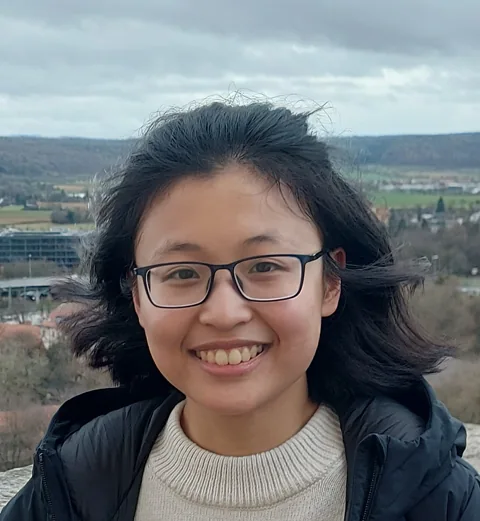
PhD student in EECS at MIT CSAIL.
I study structure in multimodal foundation models, and how it can make learning more reliable.
I’m co-supervised by Phillip Isola, Antonio Torralba, and Stefanie Jegelka.
During my bachelor’s at CUHK, I had the pleasure of researching with Aaron Courville and Yann Dauphin at Mila; Wieland Brendel at the Max Planck Institute in Tübingen; and Serge Belongie at Copenhagen’s Pioneer Centre. At CUHK, I worked with Hongsheng Li (MMLab), Anthony Man-Cho So, Farzan Farnia, and Qi Dou.
Research
All researchI’m interested in cryptographic approaches to AI safety and robustness: property testing to certify model behaviour, one-way functions for the safe deployment of open-source models, and zero-knowledge proofs to probe convergent and emergent multi-agent systems.
I’m also working towards Platonic world models that reason across modalities, including sim-to-real systems in which agents perform experiments following the scientific method. My recent work explores the structure of synthetic data, reliable representations, and what makes data useful for learning.
Recently
News & talksSelected as 1 of 600 young scientists globally to dialogue with Nobel Prize winners in peace and the interdisciplinary sciences at the 75th Lindau Nobel Laureate Meetings. Supported by a fellowship from the Texas A&M University.
Selected as a scholarship recipient and participant of the 16th Gathering for Gardner conference!
Selected work
All papers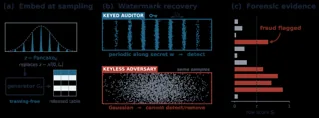
Preprint 2026
Tabular Pancakes: Cryptographic Watermarks Against Dataset Fabrication
Watermarking tabular data generators by sampling latents from the keyed Pancake distribution (hCLWE) instead of Gaussian, for detecting fraudulent data fabrication.
NeurIPS 2026Oral
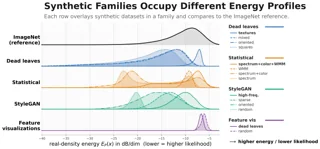
Shaping Useful Noise: Energy Distributions Predict Visual Pretraining Quality
Synthetic data is useful when it occupies the right real-image likelihood regimes; ELD measures energy shape to predict, diagnose, curate visual pretraining data.
ICLR 2025Oral
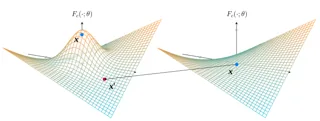
UNI: Unlearning-based Neural Interpretations
Debiased path attribution by perturbing in the unlearning direction of steepest ascent.
Outside the lab
A little more about me
Let’s talk.
Research questions, shared interests, or a conversation over coffee.